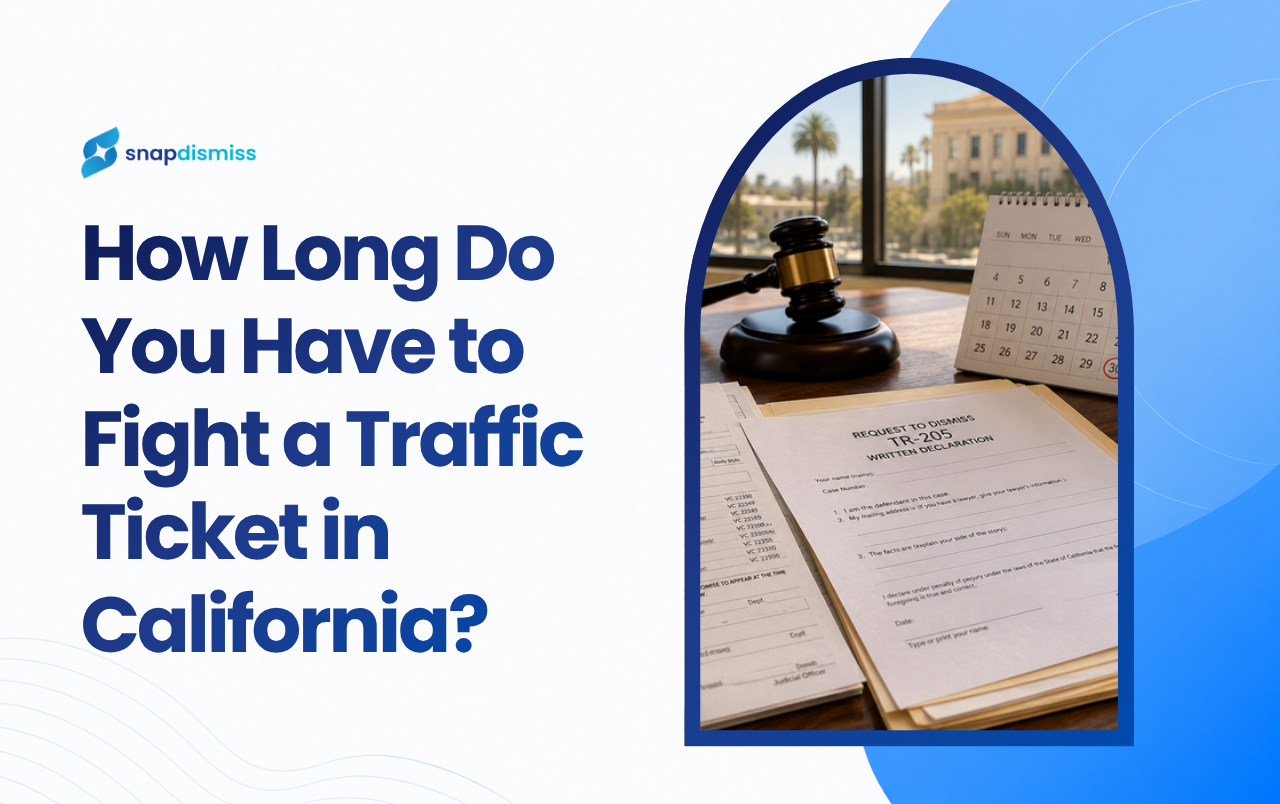
You don’t have to take a day off work, sit in a courtroom, or hire a lawyer to fight traffic ticket charges in California. State law gives every driver the right to contest a citation entirely by mail, using a sworn written statement instead of a courtroom appearance and thousands of tickets are dismissed this way every month.
Here’s exactly how the process works, why most drivers never use it, and the step-by-step method that gives you the best shot at getting your citation thrown out.
Why Most Drivers Never Fight Their California Traffic Ticket
Most people who get a California traffic ticket just pay it. Not because they’re guilty, but because the alternative looks worse: missing work for a court date, paying a traffic attorney more than the fine itself, or not knowing the process exists at all. Courts count on this. The vast majority of citations issued in California are paid without ever being contested, even though a meaningful share would likely be dismissed if the driver simply challenged the evidence.
The root problem isn’t that these cases are unwinnable, it’s that the process to fight traffic ticket California courts require is genuinely unfamiliar to most drivers. California Vehicle Code 40902 gives you the right to a trial by written declaration, a formal process most people have never heard of because it isn’t printed anywhere on the citation itself in plain language.
The Real Way to Contest a Ticket: Trial by Written Declaration
A trial by written declaration lets you submit a sworn, written defense to the court instead of appearing in person. You explain, in a legally structured statement, why the citing officer’s evidence doesn’t establish every element of the violation. A judge reviews your declaration, the officer’s report (if one is filed), and any exhibits you attach, then rules by mail. No courtroom, no attorney, no missed workday.
This is currently the most effective form of traffic ticket defense available to California drivers who want to skip court entirely, and it applies to nearly every infraction-level citation, including speeding, stop sign violations, and red light tickets. The main exception is DUI-related charges under CVC 23152, which must be handled in person.
Step-by-Step: How to Fight Your Ticket by Mail
- Request Form TR-205 from your local court’s traffic division or download it from the California Courts self-help website.
- Enter your plea and case details on the front of the form, including citation number and court date.
- Write your Declaration of Facts on the back, or attach Form MC-031 if you need extra space. This is where you name the exact legal element the citing officer’s evidence fails to establish.
- Attach evidence photos, diagrams, or documents that support your account, each one referenced by name in your written statement.
- Include bail by check or money order made payable to the Superior Court. Never pay online before your trial, since that’s treated as a guilty plea.
- Mail the full packet to the court’s mailing address at least 5 to 7 business days before your due date.
This is the complete process to contest traffic ticket charges without appearing in person, and it works the same way whether you’re disputing a moving violation or a parking-adjacent infraction covered under this process.
Real Example: Fighting a Speeding Ticket by Mail
Consider a driver cited for going 12 mph over the limit on a clear, dry stretch of highway. Rather than pay the fine, they filed a speeding ticket California declaration arguing that the citation failed to document the specific radar calibration date required under CVC 40802. They attached a photo of the roadway showing clear sightlines and normal traffic flow, tying the image directly to their argument in the declaration text. The officer never responded to the court’s notice, and the judge, finding the calibration element unproven, dismissed the citation.
The lesson isn’t that officer no-shows guarantee a win, they don’t, since the case still goes to a judge either way. The lesson is that a declaration built around a specific, provable legal gap consistently outperforms a generic “please dismiss my ticket” letter.
Common Mistakes When You Fight a Speeding Ticket or Citation
- Writing an emotional appeal instead of a legal argument. Judges need a reason grounded in the Vehicle Code, not a personal story.
- Missing the response deadline. Your TR-205 packet has to be mailed before your citation’s due date, not the day of.
- Paying bail online before filing. This is treated as a guilty plea and forfeits your right to a written declaration trial.
- Attaching evidence that’s never explained. An unlabeled photo or diagram carries no legal weight on its own.
- Assuming a lawyer is required. Every driver who wants to fight speeding ticket charges can file a written declaration without legal representation.
Expert Tips for a Stronger Declaration
- Open with the Vehicle Code section you’re charged under, not your personal story. Judges scan for the legal hook first.
- Type your declaration. Handwriting is technically allowed, but typed statements read as more credible.
- Photograph the scene within 24 to 48 hours of the citation, while conditions still match what you’re describing.
- Keep it under one page when possible. Concise, targeted declarations are easier for a judge to follow than long narratives.
- Consider a service built for this. If drafting the legal language feels intimidating, using a traffic ticket lawyer alternative that builds the declaration for you removes most of the guesswork.
Trial by Written Declaration vs. Paying the Fine
| Paying the Ticket | Fighting It by Mail |
|---|---|
| Guaranteed conviction and points on your record. | Real chance of full dismissal if the evidence has gaps. |
| Insurance premiums often rise for three years. | A dismissal keeps your record and premiums unaffected. |
| No court appearance needed, but no defense either. | No court appearance needed, and you still get a defense. |
Frequently Asked Questions
Can I fight a traffic ticket in California without going to court?
Yes. California Vehicle Code 40902 allows drivers to file a trial by written declaration, submitting a sworn statement and evidence by mail instead of appearing in person. A judge reviews the case and mails a decision, typically within 90 days.
How much does it cost to contest a ticket this way?
You pay the bail amount listed on your citation, the same amount you’d pay to plead guilty. If your declaration succeeds, the court refunds the full bail. There’s no additional court filing fee for this process.
What happens if I lose my written declaration trial?
You have 20 days from the date the court mails its decision to request a trial de novo using Form TR-220, a full new trial in person. This gives you a second opportunity even after an unfavorable written decision.
Does fighting a traffic ticket by mail work for speeding tickets?
Yes, speeding citations are among the most common infractions resolved through written declaration. Radar and laser detection cases in particular often hinge on documentation requirements, like officer certification and equipment calibration, that citations frequently fail to establish clearly.
Is trial by written declaration the same as traffic ticket dismissal?
Not automatically. Filing a declaration is how you request a traffic ticket dismissal, but the outcome depends on whether your written argument successfully shows the prosecution’s evidence doesn’t prove every required element of the violation.
Can I fight a ticket by mail if I live outside California?
Yes. Because the entire process happens through the mail, out-of-state drivers cited in California can use the same traffic ticket by mail process without traveling back for a court date.
Fight Your Ticket the Way State Law Already Allows
You don’t need a courtroom or a lawyer to fight traffic ticket charges in California, you need a well-built written declaration that names the exact legal gap in the evidence against you. The process is already built into state law; most drivers just never use it.
SnapDismiss builds your declaration for you, identifying your exact Vehicle Code violation, drafting the legal argument, and formatting a court-ready TR-205 packet for a flat $149.
Start your written declaration now →
Want more detail before you start? See how the TR-205 form is filled out step-by-step before you mail in your own declaration.
Disclaimer: This article is for general informational purposes only and does not constitute legal advice. Individual circumstances vary. For advice specific to your case, consult a licensed California attorney. See the full SnapDismiss disclaimer for details.