The Exact Letter That Gets California Traffic Tickets Dismissed When Officers Don’t Show Up
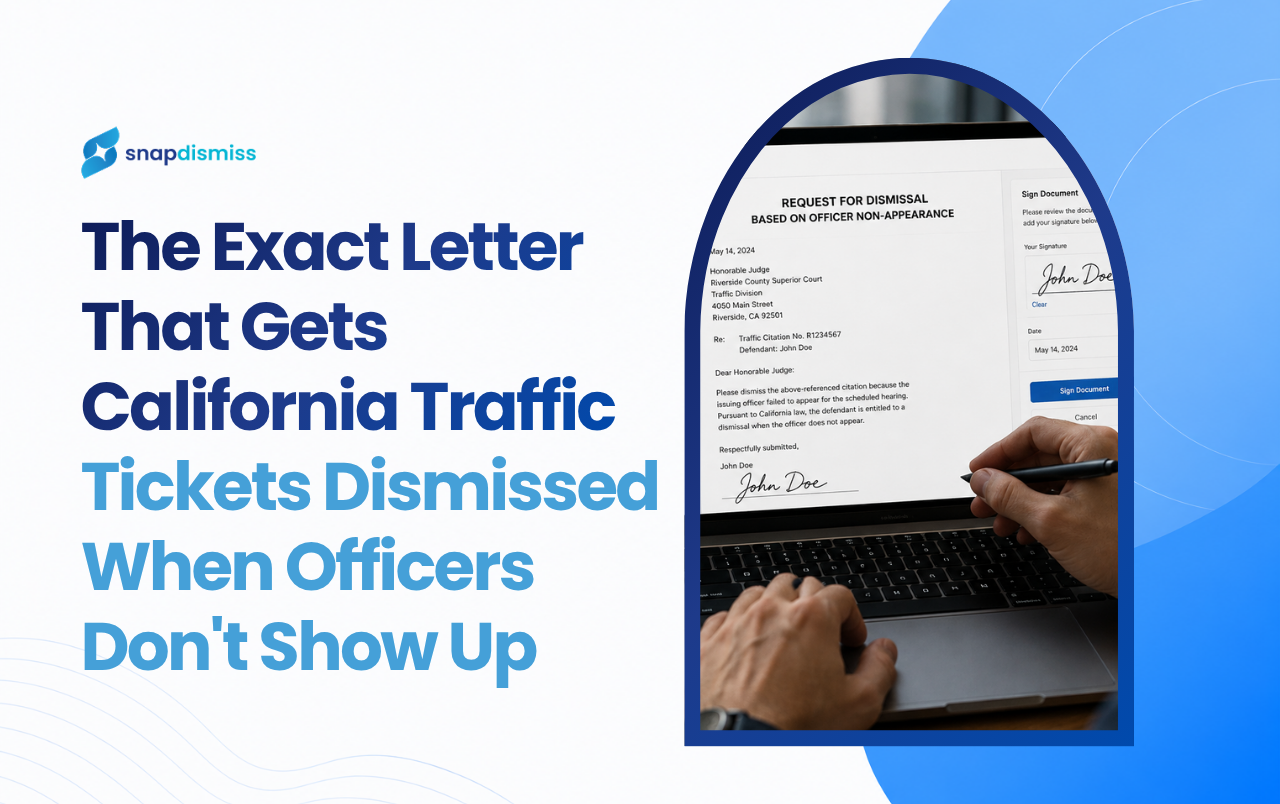
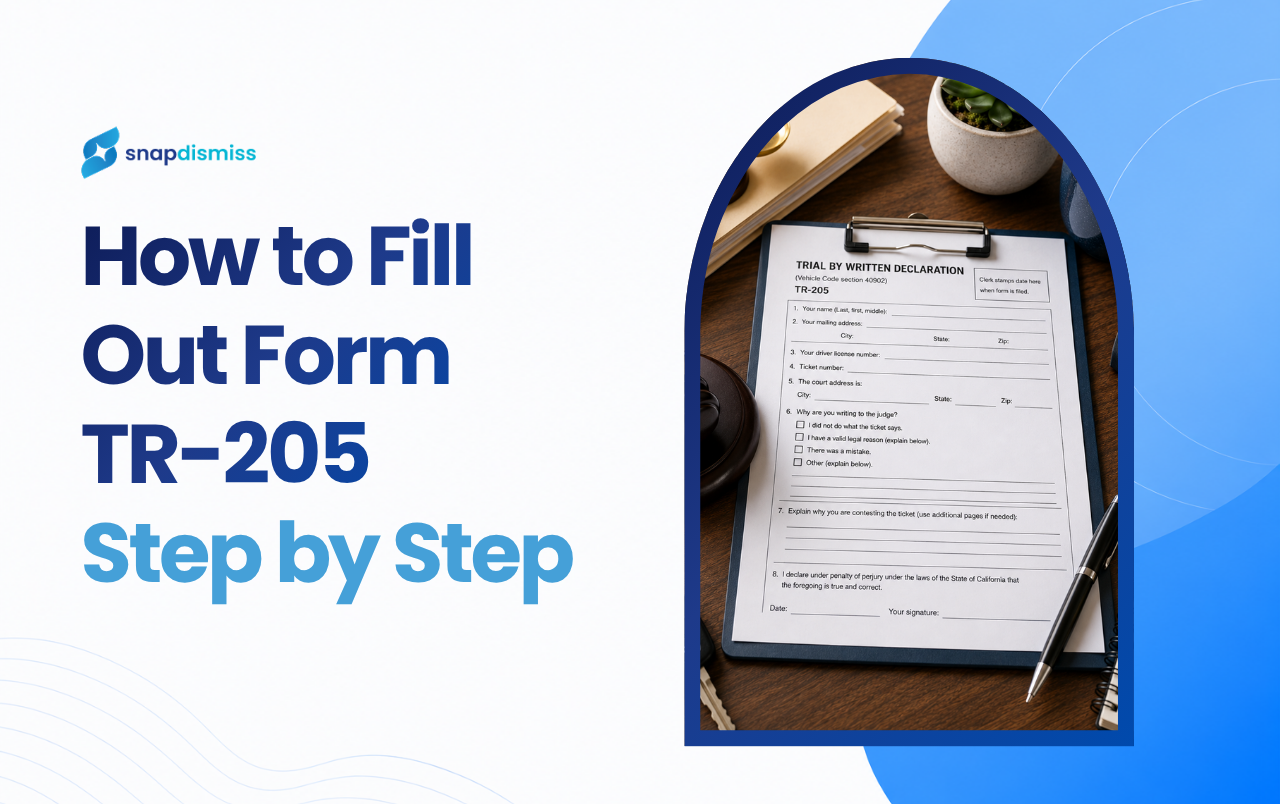
There’s no secret form called a California traffic ticket dismissal letter that you mail in separately from your paperwork. The “letter” people search for is actually the sworn Declaration of Facts you submit as part of your TR-205 form California courts require for a trial by written declaration and its exact wording is what decides whether a judge dismisses your case, especially when the citing officer never responds.
Here’s the real structure that works, why officer no-shows matter (but aren’t an automatic win), and a full sample declaration you can adapt to your own citation.
What the “Dismissal Letter” Actually Is
A traffic ticket dismissal letter California drivers look for is, legally, the Declaration of Facts section on the back of Form TR-205, filed under California Vehicle Code 40902. It’s a sworn, signed statement made under penalty of perjury not an informal letter to a clerk. Courts don’t accept separate dismissal request letters outside this process; everything has to go through the official written declaration form.
That distinction matters because a lot of generic templates online read like personal appeals (“please dismiss my ticket, I’m a good driver”) instead of the legal argument a judge is actually looking for.
Why Officer No-Shows Matter (But Aren’t Automatic)
If the citing officer didn’t appear traffic court California proceedings require a response for, your case doesn’t automatically dismiss. Under California Rules of Court, Rule 4.210(b)(5), the case still goes to a judge for decision using whatever’s on file, including your citation. But officer non-response does remove the prosecution’s strongest piece of evidence their sworn testimony which is exactly why the wording of your own declaration has to carry the entire legal argument on its own.
The Exact Letter Structure That Gets Results
Every strong trial by written declaration California submission follows the same seven-part structure, whether it’s for speeding, a stop sign, or a red light citation:
- Opening identification your name, citation number, and a clear “Not Guilty” plea, sworn under penalty of perjury.
- The specific Vehicle Code section you’re charged under stated explicitly in the first paragraph.
- The exact legal element the prosecution must prove for that code section, and why the evidence on file doesn’t establish it.
- Factual, dated details location, time, weather, road conditions, and detection method used.
- Named exhibits every photo, diagram, or document referenced by name and tied to a specific sentence.
- A direct legal conclusion stating why the facts and evidence support a Not Guilty finding.
- A closing request for dismissal and full bail refund, followed by your signature and date.
Notice what’s missing from this list: apologies, excuses, or appeals to character. None of that is a legal argument, and judges reviewing hundreds of these declarations a month skim right past it.
A Full Sample Declaration Letter
Here’s what that structure looks like written out, using a speeding citation as an example. Adapt the bracketed sections to your own citation:
“I, [Full Name], hereby declare under penalty of perjury that the following facts are personally known to me and are true and correct. Citation Number: [XXXXXX]. I plead Not Guilty.
I am charged under CVC [22350], which requires the prosecution to prove that my speed was unsafe for the conditions present at the time and location cited. On [date] at approximately [time], I was traveling on [road name] under clear, dry conditions with light traffic.
Exhibit A is a photograph taken at the cited location showing [describe: sign visibility, road conditions, traffic density]. Exhibit B is a diagram showing the officer’s stated position relative to my vehicle at the time of the reading.
The citation does not establish, and no evidence in the case file establishes, that my speed was unsafe for the conditions described. For the foregoing reasons, I respectfully request that this court find me Not Guilty and refund the full bail amount deposited.”
That’s a complete, legally structured declaration built for a written submission, not a spoken appeal. If you’re building one for a different violation, the structure stays the same you just swap in the Vehicle Code section and the specific element the prosecution can’t prove.
How to Submit It: Step-by-Step
- Download the current TR-205 form from the California Courts self-help site or your local court’s traffic page.
- Type your declaration on the reverse side, or attach it on Form MC-031 if you need more space.
- Check every evidence box that matches an exhibit you’re attaching, and count your total pages.
- Include bail by check or money order made out to “Superior Court” never pay online, since that’s treated as a guilty plea.
- Mail to the court’s mailing address (not always the same as its street address) at least 5 to 7 days before your due date.
This is the same process behind any solid attempt to fight California traffic ticket by mail instead of appearing in person.
Real Example: Generic Letter vs. Structured Declaration
| Generic “Dismissal Letter” | Structured Declaration |
|---|---|
| “Please dismiss my ticket. I have a clean record and this was a mistake.” | “Under CVC 22450, the prosecution must prove I failed to reach a complete stop at the limit line. Exhibit A shows the limit line markings were faded and inconsistent with a clearly visible stopping point.” |
| No reference to the Vehicle Code, no exhibits named. | Every claim tied to a named exhibit and a specific legal element. |
| Judge found no legal basis to dismiss. Convicted. | Judge found the element unproven. Dismissed. |
Common Mistakes
- Writing an emotional appeal instead of a legal argument. Judges need a reason grounded in the Vehicle Code, not sympathy.
- Leaving out the specific code section. Every declaration should open with exactly what you’re charged under.
- Attaching evidence that’s never referenced in the text. An unlabeled photo carries no legal weight.
- Assuming the officer’s silence writes your declaration for you. Your letter has to win on its own, regardless of whether the officer responds.
- Missing the filing deadline while trying to perfect the wording. A solid declaration submitted on time beats a polished one submitted late.
Expert Tips
- Type your declaration. The form technically allows print, but typed submissions read as more credible and professional.
- Open with the Vehicle Code section, not your story. Judges scan for the legal hook first.
- Keep it under one page when possible. Concise, targeted declarations are easier for a judge to follow than long narratives.
- Photograph your evidence within 24 to 48 hours of the citation, while conditions still match what you’re describing.
Frequently Asked Questions
Is there an actual dismissal letter I can send to the court?
No separate letter exists. What people call a “dismissal letter” is the Declaration of Facts you submit with Form TR-205 under CVC 40902. It must be filed through the official written declaration process, not mailed as an independent letter.
Does the officer not showing up guarantee my ticket is dismissed?
No. Under California Rules of Court, Rule 4.210(b)(5), your case still goes to a judge for decision even without an officer response. A well-written declaration significantly improves your odds, but it isn’t automatic.
How do I get a traffic ticket dismissed in California?
File a trial by written declaration using Form TR-205, with a Declaration of Facts that names the specific Vehicle Code element the prosecution can’t prove, backed by dated evidence. This is currently the most common way to how to get a traffic ticket dismissed California courts will actually consider, without appearing in person.
Can I request a speeding ticket dismissal without going to court?
Yes. A speeding ticket dismissal California case can be pursued entirely by mail through a trial by written declaration, provided the infraction isn’t DUI-related under CVC 23152.
What should I avoid writing in my declaration?
Avoid emotional language, personal excuses, or admissions of guilt. Stick to factual, dated details and a direct legal argument tied to the Vehicle Code section you’re charged under.
How long does it take to hear back after submitting a written declaration?
Courts must mail their decision within 90 days of your due date, though many respond sooner. If you lose, you have 20 days to request a trial de novo, a full in-person hearing.
Write the Letter That Actually Works
A California traffic ticket dismissal letter isn’t a form you download and fill in blanks on it’s a legal argument you build around your specific citation, evidence, and detection method. Whether or not the officer responds, the declaration that wins is the one written like a legal document, not a personal plea. If you’re ready to fight traffic ticket without going to court California lets you skip entirely, this is where you start.
SnapDismiss builds your declaration for you identifying your exact Vehicle Code violation, drafting the legal argument, and formatting a court-ready TR-205 packet for a flat $149.
Generate your dismissal declaration now →
Want to see the process from the start? Learn how to request traffic ticket dismissal California courts will actually review before your deadline passes, or read how a written declaration traffic ticket California case compares to showing up in person.
Thousands of drivers have already used this exact approach for traffic ticket dismissal California without hiring an attorney or missing a day of work.
Disclaimer: This article is for general informational purposes only and does not constitute legal advice. Individual circumstances vary. For advice specific to your case, consult a licensed California attorney. See the full SnapDismiss disclaimer for details.