How to Dismiss a California Traffic Ticket Without Hiring a Lawyer
A single speeding ticket in California can cost far more than the fine on the citation. Between court fees, a possible DMV point, and the insurance hike that follows, one infraction can run into the thousands over three years. The good news: handling a California traffic ticket without a lawyer is not only possible, it’s how thousands of drivers resolve their citations every year using a legal process the state built specifically for self-represented drivers.
Quick Answer: Can You Really Skip the Lawyer?
Quick answer: Yes. California allows any driver to request a trial by written declaration using Judicial Council form TR-205 no courtroom, no attorney, and no time off work required. You submit your written statement of facts and evidence by mail, the officer is asked to respond in writing, and a judge decides the case on paper. If the officer doesn’t respond, the citation is typically dismissed.
The Real Problem: Most Drivers Overpay Out of Habit, Not Necessity
Most people treat a ticket like a bill: pay it and move on. That instinct is expensive. Paying a ticket is a guilty plea. It adds a point to your DMV record, and that point typically stays countable for at least three years. During that window, insurers see the conviction and raise your premium often significantly.
Here’s what that “easy” payment actually costs over time:
| Path | Upfront Cost | 3-Year Insurance Impact | Time Required |
|---|---|---|---|
| Pay the ticket | $100–$500+ fine | Often $900–$1,800 in added premiums | 5 minutes |
| Hire a traffic attorney | $50–$300 flat fee (simple cases), $500+ for complex ones | None if dismissed/reduced | Days to weeks, some court involvement |
| Fight it yourself (TR-205) | Bail deposit only (refundable if you win) | None if dismissed | 1–2 hours to prepare, no court visit |
When you fight California traffic ticket charges yourself instead of defaulting to payment, you keep the option to avoid both the point and the insurance hit without paying attorney rates that can run $100 to $500 an hour for more complex cases.
Why Drivers Assume They Need a Lawyer (and Why That’s Outdated)
The belief that you need an attorney to contest California traffic ticket charges comes from how criminal court works on TV but traffic infractions aren’t criminal cases. California created the written declaration process specifically so drivers could self-represent without ever stepping into a courtroom. According to the California Courts Self-Help Guide, any driver can request this process for most infraction-level citations, and the court is required to notify the citing officer and request their side in writing.
The other reason drivers hire attorneys unnecessarily: they assume the citing officer will always show up to contest the case. In practice, a meaningful share of written declarations are dismissed simply because the officer never files a response the case is closed in the driver’s favor by default. That single fact is the biggest reason self-filed declarations can compete with an attorney’s result at a fraction of the cost.
Step-by-Step: How to Fight a Traffic Ticket Online Without a Lawyer
1. Confirm your ticket qualifies
Most standard infractions speeding, stop sign, red light, cell phone use qualify for a written declaration. Serious misdemeanors and anything requiring mandatory court appearance generally do not.
2. Choose the written declaration path
This is how most drivers who fight a traffic ticket online without an attorney actually do it. You’re building a paper case instead of arguing one out loud.
3. Fill out the TR-205 form
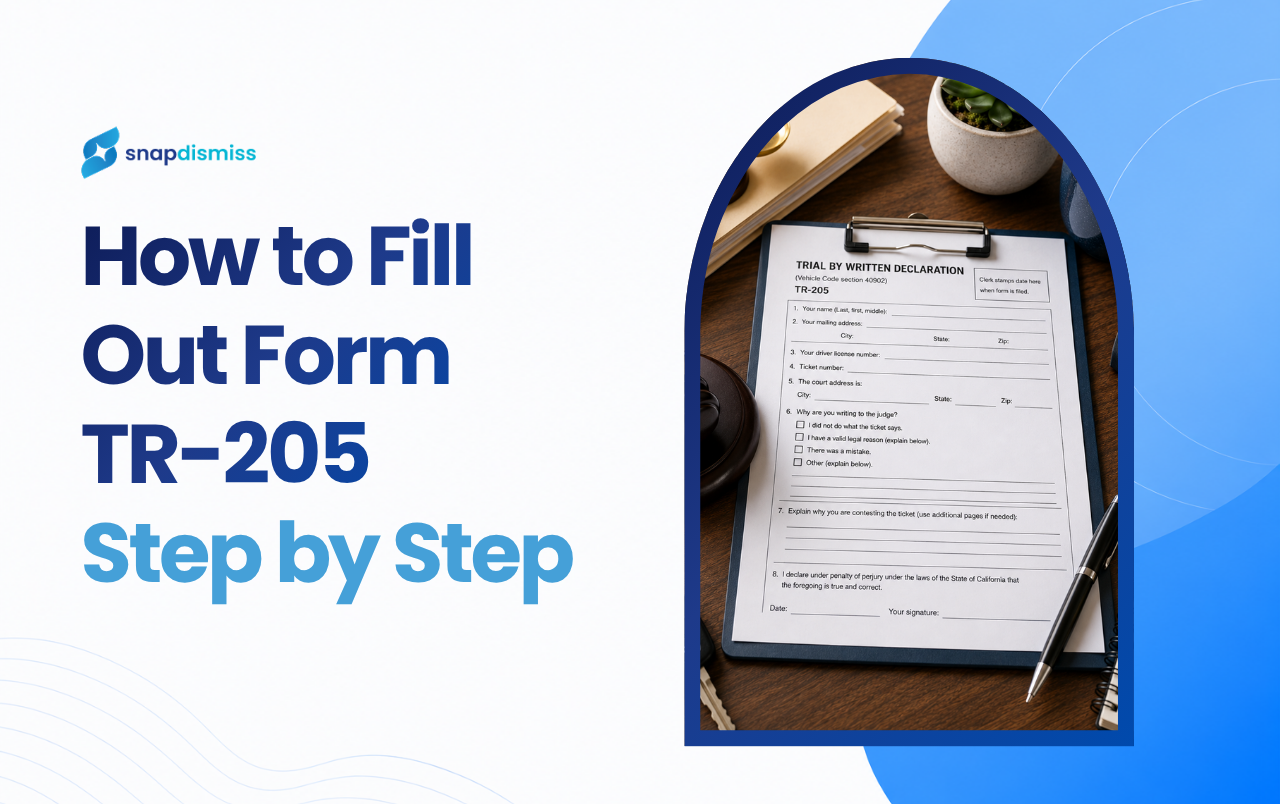
The TR-205 form asks for your citation details and a Statement of Facts your account of the stop, written clearly and factually, signed under penalty of perjury. This section is where most self-represented cases are won or lost, so specificity matters more than length.
4. Generate your declaration instead of freewriting it
A blank Statement of Facts box is the single biggest reason drivers give up and call a lawyer. Tools built to generate TR-205 declarations walk you through the right structure what to include, what to leave out, and how to frame your account so it reads like a case, not a complaint.
5. Attach evidence and mail it in
Photos, diagrams, and any relevant documentation strengthen your statement. Prefer to skip the courthouse and the mailbox uncertainty? Here’s exactly how to fight ticket by mail the right way, with proof of delivery.
6. Pay bail and wait for the decision
Bail is refunded if you win or the fine is reduced. The court requests a statement from the officer, and a judge rules based on both submissions.
Real-World Example: A Driver Who Skipped the Attorney Entirely
A Sacramento driver cited under CVC 22350 (California’s basic speed law) got two quotes from local traffic attorneys: $275 and $350, plus a warning that a court date might still be required. Instead, she filed her own trial by written declaration, attaching a dashcam still and a written account of the road conditions cited in the officer’s notes. The officer did not submit a response declaration within the court’s window, and the citation was dismissed outright no point, no fine, and no attorney fee. Not every case ends this way, but it illustrates why self-filing is worth attempting before assuming legal representation is required.
Common Mistakes Drivers Make Going the DIY Route
- Writing an emotional statement instead of a factual one judges respond to specifics: distances, conditions, timing, not opinions about the officer.
- Skipping evidence entirely when a single photo or diagram could support the account.
- Assuming DIY means unprepared a rushed TR-205 with vague facts underperforms a well-built one every time.
- Forgetting the bail deposit, which causes the court to reject the whole submission.
- Missing the due date because they were still deciding whether to hire an attorney instead of just filing.
These are the same failure points that separate a successful traffic ticket defense California case from a rejected one, lawyer or not. For a broader comparison of your options, see attorney vs. DIY vs. written declaration.
Expert Tips for a Stronger Self-Filed Case
- Request the officer’s certification/calibration records for radar or lidar-based citations missing records can undercut the prosecution’s case for a California speeding ticket defense.
- Stick to what you can prove. A diagram of the intersection is more persuasive than a paragraph of frustration.
- File early. Courts need time to request and receive the officer’s response before your due date.
- If you lose, you’re not done a trial de novo (new trial) is available within 20 days in most cases.
- Compare your written declaration draft against real examples before submitting; small formatting mistakes can trigger a rejection and force a resubmission.
Frequently Asked Questions
Can I really dismiss a California traffic ticket without a lawyer?
Yes. California’s trial by written declaration process (form TR-205) is designed for self-represented drivers. You submit your account in writing, the officer is asked to respond, and a judge decides no attorney or courtroom required.
Does fighting my ticket myself hurt my chances compared to hiring an attorney?
Not inherently. The written declaration process treats self-represented and attorney-prepared submissions the same way. Outcomes depend more on the quality of your Statement of Facts and evidence than on who filed it.
What happens if the officer doesn’t respond to my written declaration?
If the citing officer doesn’t submit a response declaration within the court’s timeframe, the case is generally dismissed because there’s no evidence to support the citation.
How much does it cost to dismiss a traffic ticket California without a lawyer?
You’ll typically pay only the bail deposit equal to your fine, which is refunded if you win or the fine is reduced. There’s no attorney fee, which otherwise can run $50 to $500 or more depending on the case.
What if I lose my trial by written declaration?
You can request a new trial (trial de novo) within 20 calendar days of the court’s decision being mailed, giving you a second opportunity even after a self-filed loss.
Is a trial by written declaration the same as fighting a ticket by mail?
Yes. The TR-205 process is submitted entirely by mail (or online where the court allows it), which is why it’s often described as fighting a ticket by mail.
Bottom Line: You Don’t Need a Law Degree to Fight Back
Resolving a California traffic ticket without a lawyer isn’t a workaround it’s a formal legal process the state built for exactly this purpose. Between the attorney fees you skip and the insurance hit you may avoid, a well-prepared written declaration is often the highest-leverage 90 minutes you can spend on a citation.
Not sure where to start? Snapdismiss helps you build a court-ready TR-205 declaration in minutes, without the guesswork of a blank form. Have a specific citation you want a second opinion on? Contact our team and we’ll help you map out your options.