How Long Do You Have to Fight a Traffic Ticket in California?
Most drivers who want to fight a traffic ticket in California lose that right not because their case was weak, but because they missed a deadline they didn’t know existed. Your citation doesn’t come with a countdown clock, and the window to respond is shorter than most people assume.
Here’s exactly how much time you have, where to find your real deadline, and what happens if you’re cutting it close.
The Problem: Your Deadline Isn’t Where You’d Expect
Every citation lists a “Promise to Appear” date, and that date is your real California traffic ticket deadline. It’s usually 30 to 45 days from the citation date, but the exact number varies by county and violation type. Drivers often assume they have more time because the fine itself doesn’t feel urgent, or because no one calls or emails a reminder. Nothing prompts you until the deadline has already passed and your options have narrowed.
Missing this date doesn’t just mean a bigger fine. In many counties, it triggers a “failure to appear” charge, an additional civil assessment fee, and in some cases a hold on your driver’s license renewal through the DMV.
Why Drivers Miss This Deadline So Often
The root issue is that citations are written for compliance, not clarity. The notice tells you to appear in California traffic court by a specific date, but it doesn’t explain what “appear” actually requires, or that you can satisfy that requirement entirely by mail through a trial by written declaration. Drivers who plan to contest their ticket often spend weeks researching their options, only to discover the mailing deadline for their written defense arrives well before their court date.
The distinction matters: your traffic ticket due date California courts print on your citation is the date your response must be received, not the date you start preparing it.
How Long You Actually Have: Step by Step
- Find your Promise to Appear date printed directly on your citation. This is your hard deadline, not the citation date itself.
- Subtract mailing time. If you’re filing a written declaration, mail your packet 5 to 7 business days before that date to account for court processing.
- Confirm your violation type. DUI-related charges under CVC 23152 don’t qualify for written declaration and require an in-person appearance by the printed date.
- Request an extension if needed. Most California courts allow one continuance request, typically filed before your original due date, if you need more time to prepare.
- Track the 90-day decision window. After you submit a written declaration, the court has up to 90 days to mail a ruling.
- Note the 20-day appeal window. If you lose, you have 20 days from the date the decision is mailed to request a trial de novo using Form TR-220.
Following this timeline is the most reliable way to fight California traffic ticket charges without accidentally forfeiting your right to contest them.
Real Example: A Deadline Cut Close
Consider a driver who received a citation with a due date 30 days out. They spent three weeks researching whether to contest California traffic ticket charges or simply pay the fine, then decided to fight it with only 9 days remaining. They requested Form TR-205, wrote their declaration, gathered photo evidence, and mailed the complete packet with two days to spare before the court’s processing cutoff. The declaration was accepted and later resulted in a dismissal, but the margin was uncomfortably thin.
The lesson: deciding to fight your citation is only half the process. Starting immediately, rather than researching for weeks first, is what actually protects your right to contest it.
Common Mistakes That Cost Drivers Their Deadline
- Confusing the citation date with the due date. They’re different, and only the Promise to Appear date matters.
- Waiting for a reminder that never comes. Courts don’t send follow-up notices before your deadline passes.
- Mailing a written declaration too close to the due date. Postal delays and court processing time can push a mailed packet past the cutoff.
- Assuming an extension is automatic. Continuances must be requested, usually in writing, before your original deadline.
- Paying bail online while still deciding. This is treated as a guilty plea and ends your ability to contest the ticket at all.
Expert Tips to Protect Your Deadline
- Calendar your due date the day you receive the citation. Set a reminder at least two weeks before it, not the night before.
- Decide your path early. Choosing between court and a trial by written declaration California process on day one gives you the most preparation time.
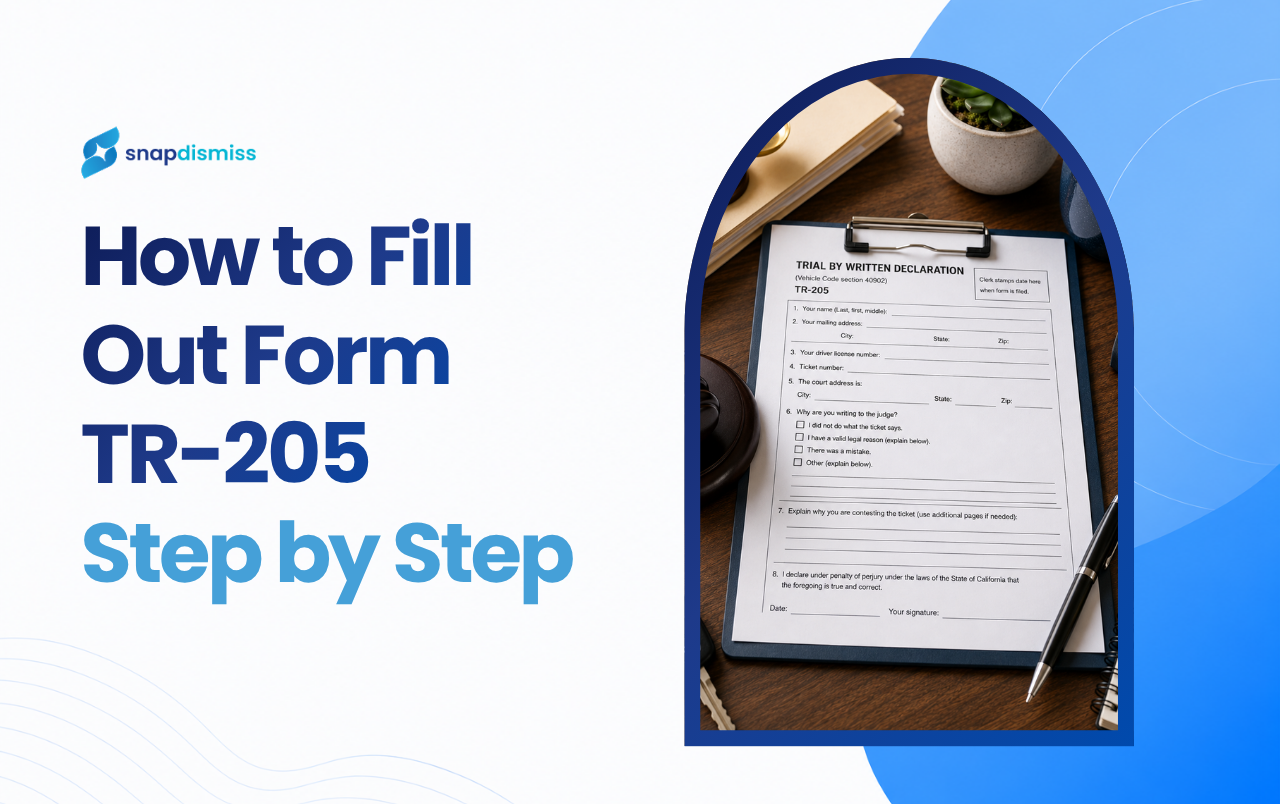
- Request your TR-205 form immediately if you’re going the written route, rather than waiting until you’ve finished drafting your argument.
- Mail with tracking. A certificate of mailing or tracked delivery gives you proof your packet arrived before the cutoff.
- Use a service built for this if you’d rather your entire traffic ticket defense California packet be handled on a guaranteed timeline.
California Traffic Ticket Deadlines at a Glance
| Deadline | Typical Timeframe |
|---|---|
| Respond to citation (Promise to Appear) | 30 to 45 days from citation date |
| Mail written declaration packet | 5 to 7 business days before due date |
| Court decision on written declaration | Up to 90 days after your due date |
| Request trial de novo if you lose | 20 days from the date decision is mailed |
Frequently Asked Questions
How long do I have to fight a traffic ticket in California?
You typically have 30 to 45 days from the citation date, based on the Promise to Appear date printed on your citation. That date is your actual deadline to respond, whether in court or by written declaration.
This applies to most traffic ticket California infractions, though the exact window can vary slightly by county.
What happens if I miss my traffic ticket deadline?
Missing your due date can result in a failure to appear charge, an additional civil assessment fee (often $300 or more), and potentially a hold on your driver’s license renewal through the DMV.
Can I get an extension on my traffic ticket deadline?
Yes, most courts allow a traffic ticket extension California request, called a continuance, if you file it before your original due date. Approval isn’t automatic and depends on the court’s discretion.
How long does it take to mail in a trial by written declaration?
Plan to mail your complete packet at least 5 to 7 business days before your due date if you want to fight traffic ticket by mail, giving the court time to receive and process it.
How long does the court take to decide a written declaration case?
California courts must mail a decision within 90 days of your due date, though many respond sooner. If you lose, you have 20 days to request a full new trial.
Don’t Let the Clock Decide for You
The right to fight a traffic ticket in California is real, but it’s time-limited, and the deadline works against drivers who wait to start. Find your Promise to Appear date the moment you receive your California traffic citation, decide your path early, and give yourself enough time to build a real defense instead of a rushed one.
SnapDismiss builds your written declaration for you, identifying your exact Vehicle Code violation, drafting the legal argument, and formatting a court-ready TR-205 packet for a flat $149, well before your deadline.
Start your written declaration now →
Disclaimer: This article is for general informational purposes only and does not constitute legal advice. Individual circumstances vary. For advice specific to your case, consult a licensed California attorney. See the full SnapDismiss disclaimer for details.