Trial by Written Declaration vs. Traffic Court: Which Should You Choose?
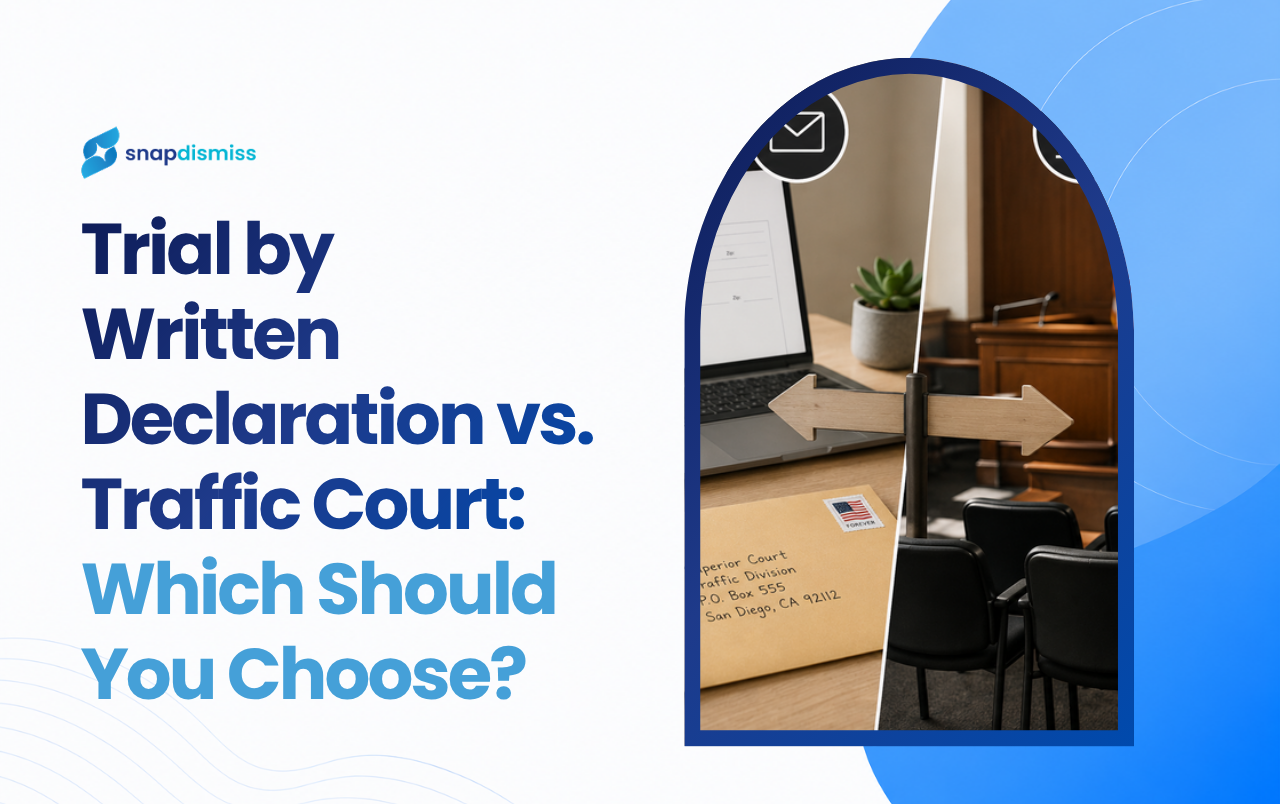
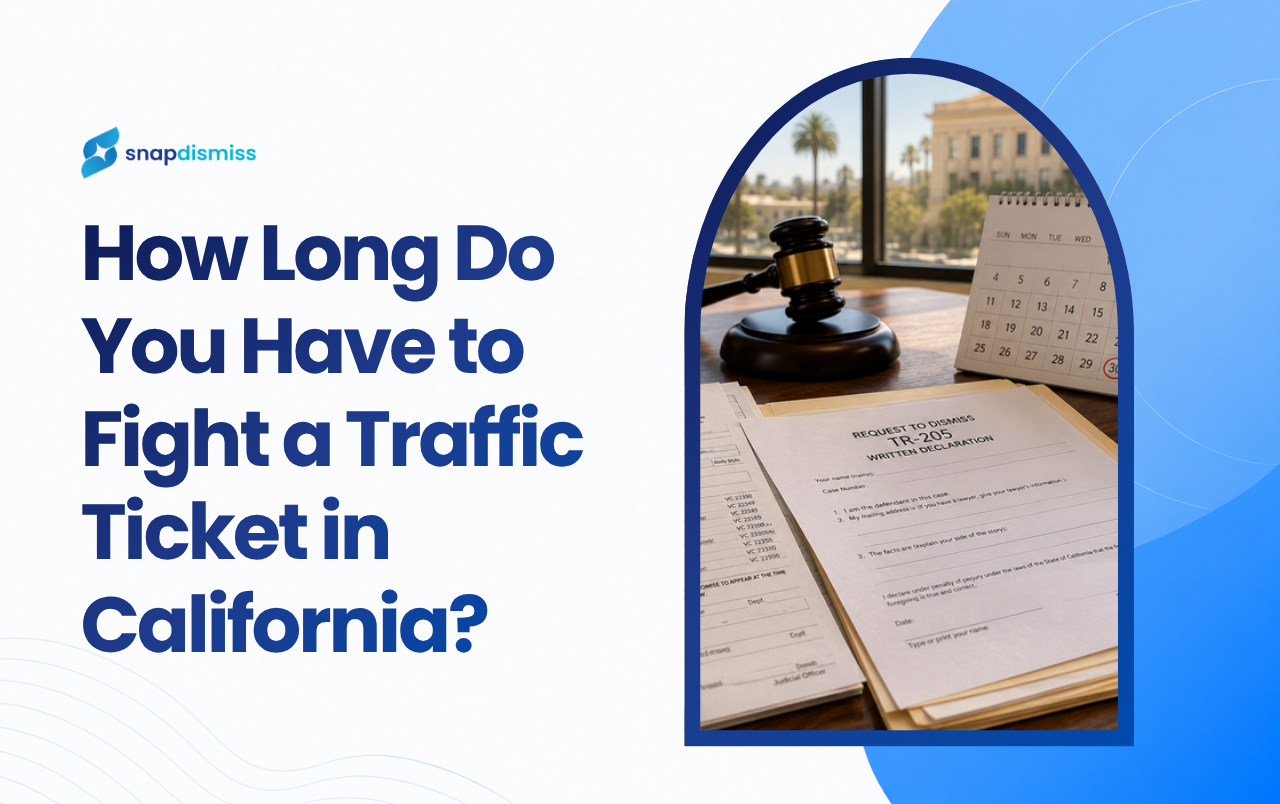
Every California citation gives you the same fork in the road: show up in a courtroom, or request a trial by written declaration California courts will decide entirely by mail. Most drivers don’t even know the second option exists, and the ones who do often pick the wrong one for their situation. That single decision affects how much time you spend, how much it costs, and your real odds of winning.
Here’s exactly how the two paths compare, when each one makes sense, and how to decide which fits your case. Understanding trial by written declaration as its own process, separate from a courtroom appearance, is the first step to choosing correctly.
The Problem: Two Paths, One Confusing Choice
When you get a citation, the notice tells you to appear in traffic court California schedules for you. What it doesn’t tell you, in plain language, is that California Vehicle Code 40902 gives you the right to skip that appearance entirely and submit a sworn written statement instead. Drivers either don’t know this exists, or they know but aren’t sure which path actually gives them a better shot at dismissal.
Picking the wrong path costs more than a missed opportunity. Showing up in court unprepared often means facing a prosecutor and judge with no structured defense. Filing a written declaration without understanding its format means your one shot at a written argument gets wasted on vague, unpersuasive language.
Why This Decision Trips Up So Many Drivers
The root cause is that the trial by written declaration vs traffic court decision looks like a simple in-person-versus-by-mail choice, but it’s actually a decision about what kind of evidence favors your case. In-person court lets you respond to a prosecutor in real time and press the citing officer on cross-examination if they show up. A written declaration removes that back-and-forth entirely, your entire case rests on the strength of the document itself.
Neither option is automatically better. The right choice depends on whether your defense benefits more from live testimony or from a carefully structured legal argument you have time to perfect before submitting.
How to Decide: Step by Step
- Check the violation type. DUI-related charges under CVC 23152 must go to court in person; written declaration isn’t available for these.
- Assess your schedule. If missing work or travel makes an in-person date genuinely difficult, written declaration removes that barrier completely.
- Evaluate your evidence. If your defense relies on photos, diagrams, or documentation you can present clearly in writing, a declaration plays to that strength.
- Consider whether you need to cross-examine. If your case depends on catching inconsistencies in an officer’s live testimony, in-person court gives you that opportunity; a written declaration doesn’t.
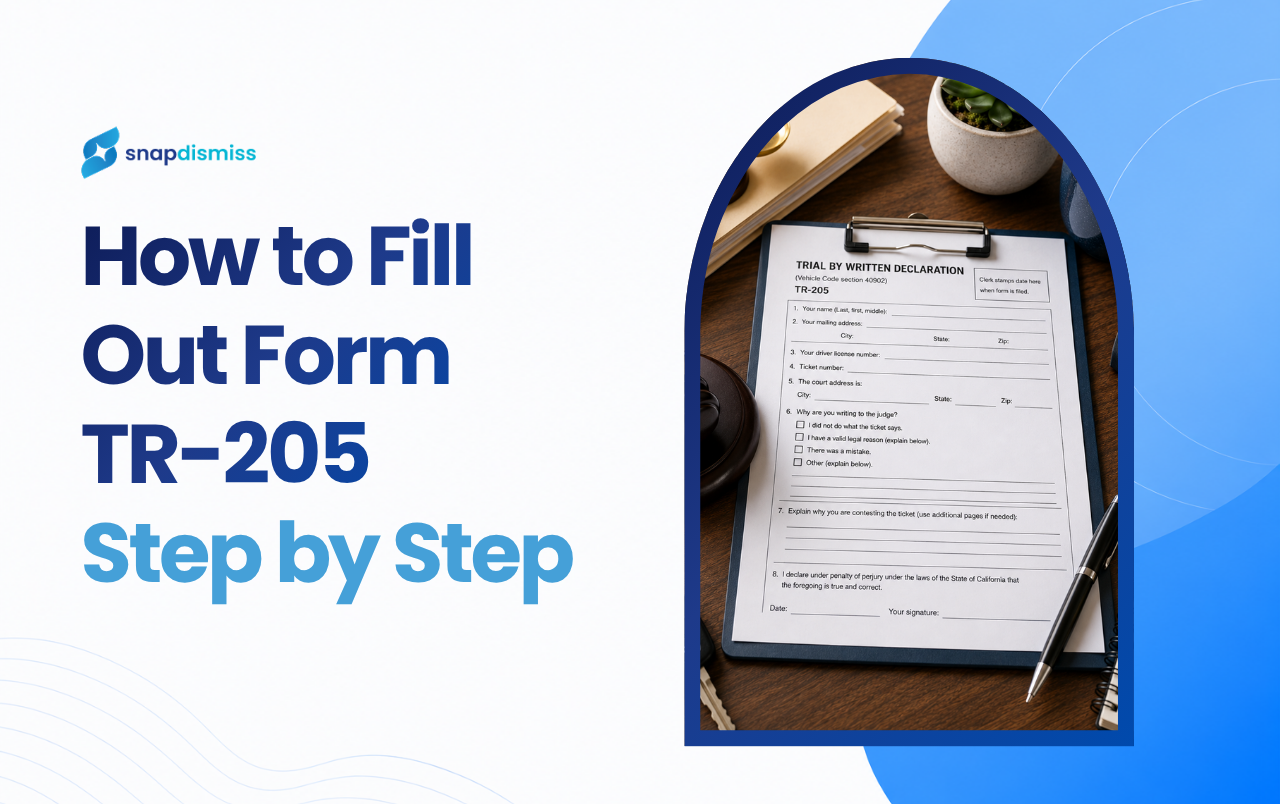
- Request Form TR-205 if you choose written declaration, and complete the Declaration of Facts section identifying the exact legal element the evidence fails to prove.
- Mail your packet, including bail payment, at least 5 to 7 business days before your due date if going the written route.
Following this process is currently the most reliable way to fight California traffic ticket charges without guessing which path suits your case.
Real Example: Same Ticket, Two Different Outcomes
Consider two drivers cited for the same red light violation in the same county. One driver appeared in court, explained their side verbally, and was convicted because they had no documentation to support their account, only their word against the officer’s report. The second driver, cited for a nearly identical situation, chose to contest California traffic ticket charges by written declaration instead, attaching timestamped photos of the intersection and a diagram showing sightline obstructions, each one referenced directly in their Declaration of Facts. That citation was dismissed.
The difference wasn’t the facts of the case, it was the format. A defense built around physical evidence and precise language usually performs better in writing than delivered verbally under pressure in a courtroom.
Common Mistakes Drivers Make Choosing Between the Two
- Assuming court is always faster. Court dates can be months out, while a written declaration only requires mailing your packet before the due date.
- Choosing written declaration without evidence. A declaration with no supporting exhibits rarely outperforms a well-prepared court appearance.
- Not knowing the trial de novo option exists. Losing a written declaration isn’t final, you can request a full new trial within 20 days.
- Paying bail online before deciding. This is treated as a guilty plea and eliminates both options.
- Assuming a lawyer is required for either path. Every driver can pursue traffic ticket defense without attorney representation, whether in court or by mail.
Expert Tips for Whichever Path You Choose
- Photograph the scene within 24 to 48 hours of your citation, regardless of which path you pick. Evidence degrades in value the longer you wait.
- Open your argument with the Vehicle Code section you’re charged under, whether speaking in court or writing a declaration.
- Never skip the exhibit references. Photos and diagrams only count if they’re tied directly to a sentence in your argument.
- Use a service built for this if you’d rather written declaration California paperwork be handled by someone who’s built hundreds of them.
Trial by Written Declaration vs. Traffic Court: Side by Side
| Factor | Written Declaration | Traffic Court |
|---|---|---|
| Time required | No missed workday; mail and wait | Requires a scheduled court appearance |
| Cross-examination | Not available | Available if officer appears |
| Best suited for | Evidence-based, documentable defenses | Cases needing live testimony or negotiation |
| If you lose | 20 days to request trial de novo | Can appeal through standard court process |
Frequently Asked Questions
What is trial by written declaration in California?
It’s a legal process under CVC 40902 that lets you contest a traffic citation by submitting a sworn written statement and evidence by mail, instead of appearing in court. A judge reviews the case and mails a decision, typically within 90 days.
Is it better to fight a ticket in court or by written declaration?
It depends on your evidence. Written declaration favors cases built on documentation like photos or diagrams, while in-person court can be stronger if your defense depends on questioning the officer directly.
Can I use trial by written declaration for any traffic citation?
It’s available for nearly all infraction-level citations, including speeding, stop sign, and red light violations. The main exception is DUI-related charges under CVC 23152, which require an in-person appearance.
What form do I need to request a written declaration trial?
You’ll need TR-205 form paperwork, which includes your plea and a Declaration of Facts section where you present your legal argument and reference any attached evidence.
Can I fight my ticket entirely online instead of by mail or in court?
Some drivers use services that let you prepare and manage your defense digitally, even though the final TR-205 packet still has to be mailed to the court. This lets you fight traffic ticket online for the drafting portion of the process.
What happens if I lose my written declaration trial?
You have 20 days from the date the court mails its decision to request a trial de novo, a full new trial in person, using Form TR-220. Losing the written round isn’t your final chance.
Choose the Path That Fits Your Case
There’s no universally “better” option between trial by written declaration California drivers rely on and a traditional court appearance, only the option that fits the evidence and constraints of your specific California traffic citation. If your defense is built on documentation you can present clearly in writing, the written route usually wins. If it depends on live cross-examination, court may serve you better.
SnapDismiss builds your written declaration for you as a complete California traffic ticket defense solution, identifying your exact Vehicle Code violation, drafting the legal argument, and formatting a court-ready TR-205 packet for a flat $149.
Start your written declaration now →
Want to see the full mail-in process from start to finish? Learn how to fight ticket by mail beyond just deciding which path to take.
Disclaimer: This article is for general informational purposes only and does not constitute legal advice. Individual circumstances vary. For advice specific to your case, consult a licensed California attorney. See the full SnapDismiss disclaimer for details.