How Many Days Do You Actually Have to Fight a California Traffic Ticket?
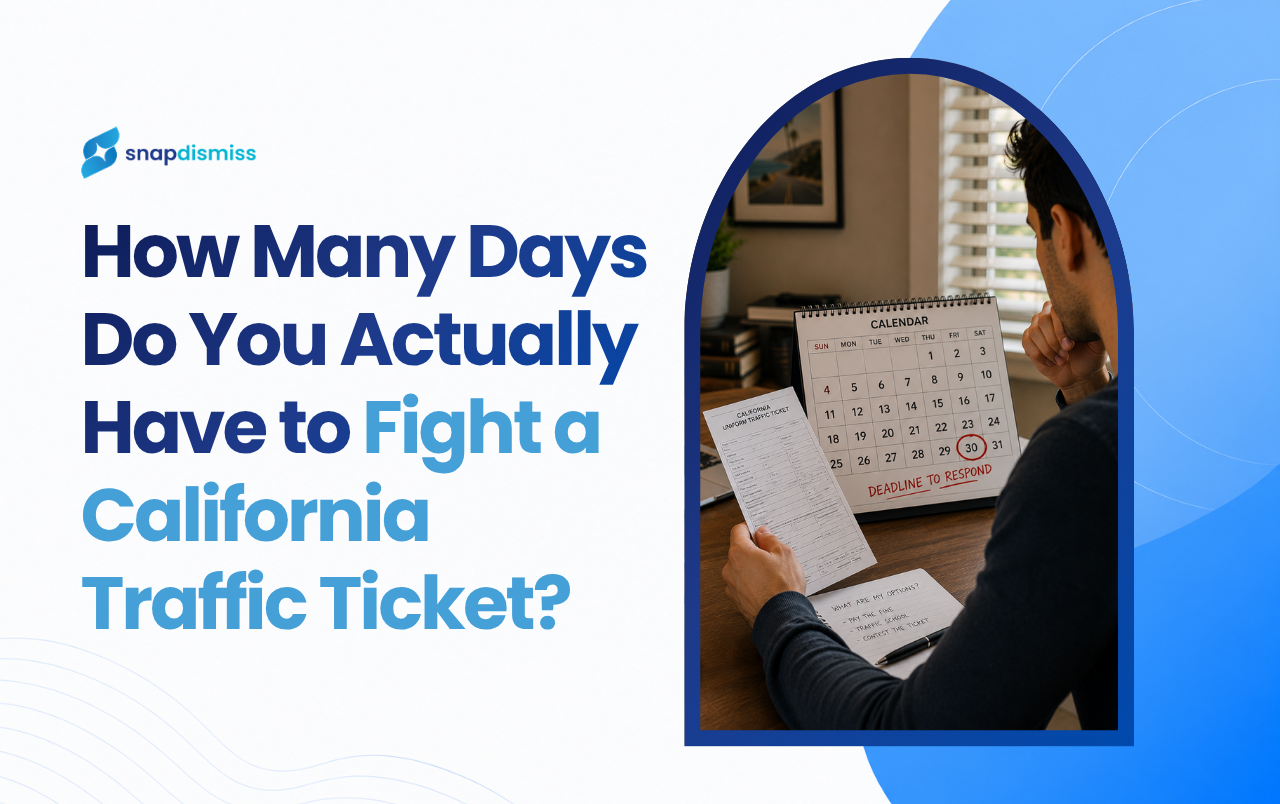
You just got pulled over, and the number that matters most on that citation isn’t the fine it’s the due date printed in the corner. If you want to fight a California traffic ticket, the real question isn’t Should I fight it, it’s how many days do I actually have before that option disappears?” Most articles give you a vague “30 days” and move on. That answer is often wrong, and getting it wrong can turn a $238 speeding ticket into a $500+ mess with a hold on your license.
Quick Answer: How Many Days Do You Have?
Quick answer: California does not set one universal deadline for every ticket. Your due date is printed directly on your citation and typically falls 30 to 60 days after the date you were cited, with the exact number set by the issuing court. Correctable “fix-it” violations must be resolved within a maximum of 30 days under California Vehicle Code §40610(d). Whatever date is printed on your ticket is your real deadline not the date a courtesy notice happens to show up in your mailbox.
Why Your Ticket’s Due Date Isn’t What Most Drivers Think
Every citation has a legal “appear by” date. Before that date, you must pay the fine, request a court hearing, file a trial by written declaration, or take some other formal action. Miss it, and the court treats the ticket as if you did nothing at all.
Here’s where it gets confusing: the deadline isn’t the same for every violation type. The table below breaks down what drivers actually deal with.
| Situation | Typical Deadline | What’s Due |
|---|---|---|
| Standard (non-correctable) infraction | 30–60 days from citation date, set by the court | Bail payment, TR-205, or court appearance |
| Correctable “fix-it” violation | Up to 30 days (Vehicle Code §40610(d)) | Proof of correction + $25 dismissal fee |
| Requested continuance | New date set by the court | Whatever the court approves |
| Trial de novo after losing a written declaration | 20 calendar days from the TR-215 mailing date | Completed TR-220 form |
This is also why your California traffic ticket deadline can look different from a friend’s, even for a similar violation. Court workload, county procedures, and violation type all shift the exact number of days. For a full walkthrough of tracking your specific date, see our guide on how to contest a traffic ticket without missing your deadline.
The Real Root Cause: Confusing the Courtesy Notice With the Deadline
Most drivers who miss their California traffic court deadline make the same mistake: they wait for a “courtesy notice” to arrive in the mail before doing anything. That notice is a reminder, not a starting gun. It’s mailed anywhere from two to eight weeks after your citation, and the timeline varies by county sometimes it never arrives at all due to a printing backlog or an address mismatch.
According to the California Courts Self-Help Guide, your obligation to act by the due date exists whether or not a courtesy notice ever reaches you. The clock starts on the citation date, not the notice date. If you’re only now checking your California ticket response time because a notice showed up, you may already be closer to the deadline than you think our guide on how to fight a traffic ticket in California before you pay it walks through what to check first.
Step-by-Step: How to Fight a California Traffic Ticket Before Your Deadline
Once you know your due date, here’s exactly how to contest a California traffic ticket without missing your window.
1. Find your exact due date
Look at the front of your physical citation. The “promise to appear” or “appear by” date is your real deadline not the date on any later notice.
2. Decide your path
You generally have four options: pay the fine, appear in court, request a continuance, or file a trial by written declaration. For most infractions, drivers who want to fight a California traffic ticket online choose the written declaration route because it avoids a courtroom entirely and can be done by mail.
3. Complete the TR-205 form and gather evidence
The TR-205 form is the official Request for Trial by Written Declaration. It asks for your citation number, the officer’s information, and a Statement of Facts your written account of what happened, signed under penalty of perjury. Attach photos, diagrams, or witness statements as needed. If you want help building a strong Statement of Facts instead of staring at a blank PDF, our TR-205 generator walks you through it section by section.
4. Pay your bail
You typically pay the full fine (called bail) when you submit your paperwork. If you win, or the fine is reduced, the court refunds the difference.
5. Submit everything before the due date with room to spare
Mail delays happen. Courts generally require your form, evidence, and payment to arrive by the due date, not just be postmarked by it. Submit at least 7–10 days early whenever possible. If you’d rather skip mailing altogether, see how to fight your ticket by mail the correct way.
Real-World Example: How a Two-Week Head Start Changed the Outcome
A San Diego driver received a speeding citation with a due date 45 days out. Instead of waiting for a courtesy notice, she pulled her due date directly off the ticket, requested a copy of the officer’s certified speed enforcement records, and mailed her TR-205 with bail 12 days before the deadline. The extra runway gave the court time to process her paperwork and request the officer’s statement before the cutoff a step that’s often skipped when declarations arrive at the last minute, which can work in the driver’s favor if the officer never responds. Her case was later dismissed. The details of any case vary, but the pattern holds: drivers who act early, not at the deadline, have more room for the process to work in their favor.
Common Mistakes That Cost Drivers Their Case
- Waiting for a courtesy notice that may never come, instead of using the due date already printed on the ticket.
- Mailing paperwork on the due date itself, leaving zero buffer for postal delays.
- Writing a vague Statement of Facts on the TR-205 instead of a specific, factual account tied to evidence.
- Forgetting to include bail, which can cause the court to reject the entire submission.
- Missing the 20-day trial de novo window after losing a written declaration, which forfeits the right to a second trial.
These mistakes are a recurring theme across traffic ticket defense California cases we see most losses trace back to timing, not the facts of the stop itself. Our breakdown of the secret to fighting a California ticket without court dates covers this in more depth.
Expert Tips for Beating the Clock
- Photograph the front and back of your citation the day you receive it, so the due date is never in question later.
- Set a calendar reminder for 10 days before your due date, not the due date itself.
- If you’re unsure whether your violation is correctable, ask the clerk directly correctable violations follow a stricter 30-day cap.
- Compare your options before choosing one. Our side-by-side on trial by written declaration vs. court appearance and our TR-205 vs. court appearance comparison both cover which path tends to win more often.
- Keep copies of everything you send, with proof of mailing or a tracking number.
Frequently Asked Questions
How many days do I have to respond to a California traffic ticket?
Your response deadline is printed on the citation itself and is typically 30 to 60 days from the date of the stop. There is no single statewide number check the “appear by” date on your specific ticket.
What happens if I miss my traffic ticket deadline in California?
The court can add a civil assessment of up to $300 under Penal Code §1214.1, report a failure to appear to the DMV, place a hold on your license renewal, and refer the balance to collections.
Does the courtesy notice extend my deadline?
No. The courtesy notice is a reminder, not a new deadline. Your due date is set from the citation date printed on your original ticket, regardless of when (or whether) a courtesy notice arrives.
How many days do I have to file a trial by written declaration in California?
Your completed TR-205 form, evidence, and bail must reach the court by the same due date listed on your citation or notice there is no separate, later deadline for choosing this option.
Can I get more time to fight my ticket?
Yes. You can request a continuance from the court listed on your citation before your due date. Courts are generally more willing to grant extensions requested well in advance rather than at the last minute.
How many days do I have to request a new trial if I lose my written declaration?
You have 20 calendar days from the date the court mails your TR-215 decision to file a Request for New Trial (Trial de Novo) using form TR-220.
Bottom Line: Don’t Let a Date You Never Checked Decide Your Case
The number of days you have to fight a California traffic ticket isn’t a mystery once you know where to look: it’s printed on your citation, and it rarely matches the “30 days” figure repeated across the internet. Find your exact due date today, decide on your path, and submit your paperwork with days to spare rather than hours.
If you’d rather not build your TR-205 declaration from scratch, Snapdismiss can help you prepare a complete, court-ready declaration in minutes. Have questions about your specific citation? Reach out to our team and we’ll help you map out your exact deadline.